
Analyzing temporal changes in loess provenance using XRF geochemistry: insights from the Velika Vrbica loess section
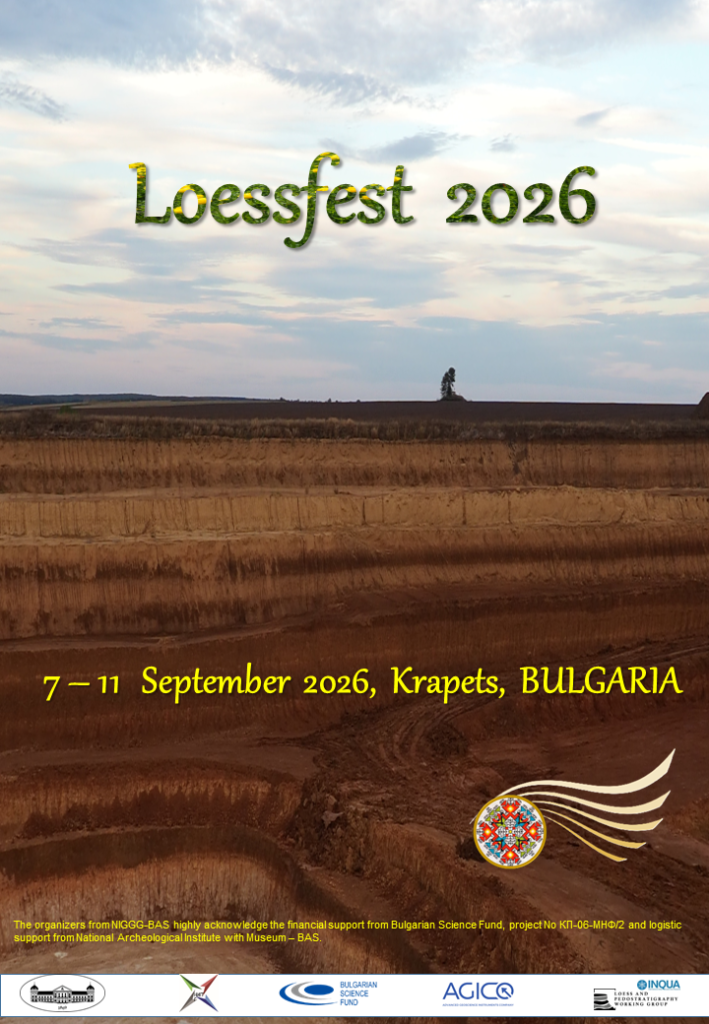
Loess Fest 2026, September 7 – 11, Krapets, Bulgaria, DOI: 10.48368/loess-2026.n27
P. Krsmanović, W. Thompson, Z.M. Perić, M. Bosnić, C.S. Ryan, T. Lukić, S.B. Marković
Abstract:
Major- and trace-element geochemistry has proven to be a valuable tool for addressing the question of loess provenance. However, few provenance studies have investigated temporal changes in loess provenance. This work presents a novel approach to analyzing loess provenance, particularly its temporal variability, by identifying reliable provenance proxies using the method of Fralick and Kronberg (1997), which was improved by providing it with an empirical framework. This method helps identify element ratios that are unaffected by weathering and grain-size sorting effects, meaning that sediments derived from a particular source should retain a relatively constant value of a given ratio regardless of grain size or degree of weathering. These ratios can therefore serve as provenance proxies, and their values in loess–paleosol sequences (LPSs) can be used to infer temporal changes in provenance.
The applicability of this methodology was illustrated on the Velika Vrbica LPS within the Lower Danube Basin, which spans from Marine Isotope Stage (MIS) 6 to the present. Reliable provenance proxies were identified using Danube sediments, which represent the main source of Danubian loess and whose provenance is assumed to be relatively constant. The analysis identified Zr/Al₂O₃ and TiO₂/Al₂O₃ ratios as the most reliable provenance proxies. Their variations within the Velika Vrbica LPS indicate that loess and Danube sediment provenance were most aligned during MIS 4 and especially during part of MIS 2, which is characterized by eolian sand. This eolian sand layer is almost entirely derived from nearby Danube alluvium. Colder and less vegetated conditions in the Danube Valley during glacial periods favoured aeolian deflation and subsequent redeposition of Danube sediments as loess. Moreover, loess is characterized by significantly higher concentrations of Zr and Ti compared to Danube sediments, pointing to the presence of additional loess sources, potentially derived from the Carpathians.
These results show that the proposed methodology can be used to reconstruct temporal changes in loess provenance, opening the door for further geochemically based temporal provenance reconstructions of loess, which are, compared to other methods such as zircon dating, relatively cheap and time-efficient, enabling high-resolution analysis.
How to cite:
Krsmanović, P., Thompson, W., Perić, Z.M., Bosnić, M., Ryan, C.S., Lukić, T., & Marković, S.B. (2026). Analyzing temporal changes in loess provenance using XRF geochemistry: insights from the Velika Vrbica loess section. Loess Fest 2026, September 7–11, Krapets, Bulgaria. https://doi.org/10.48368/loess-2026.n27